Loading...
Serving Altoona, PA and surrounding areas. (814) 552-1158
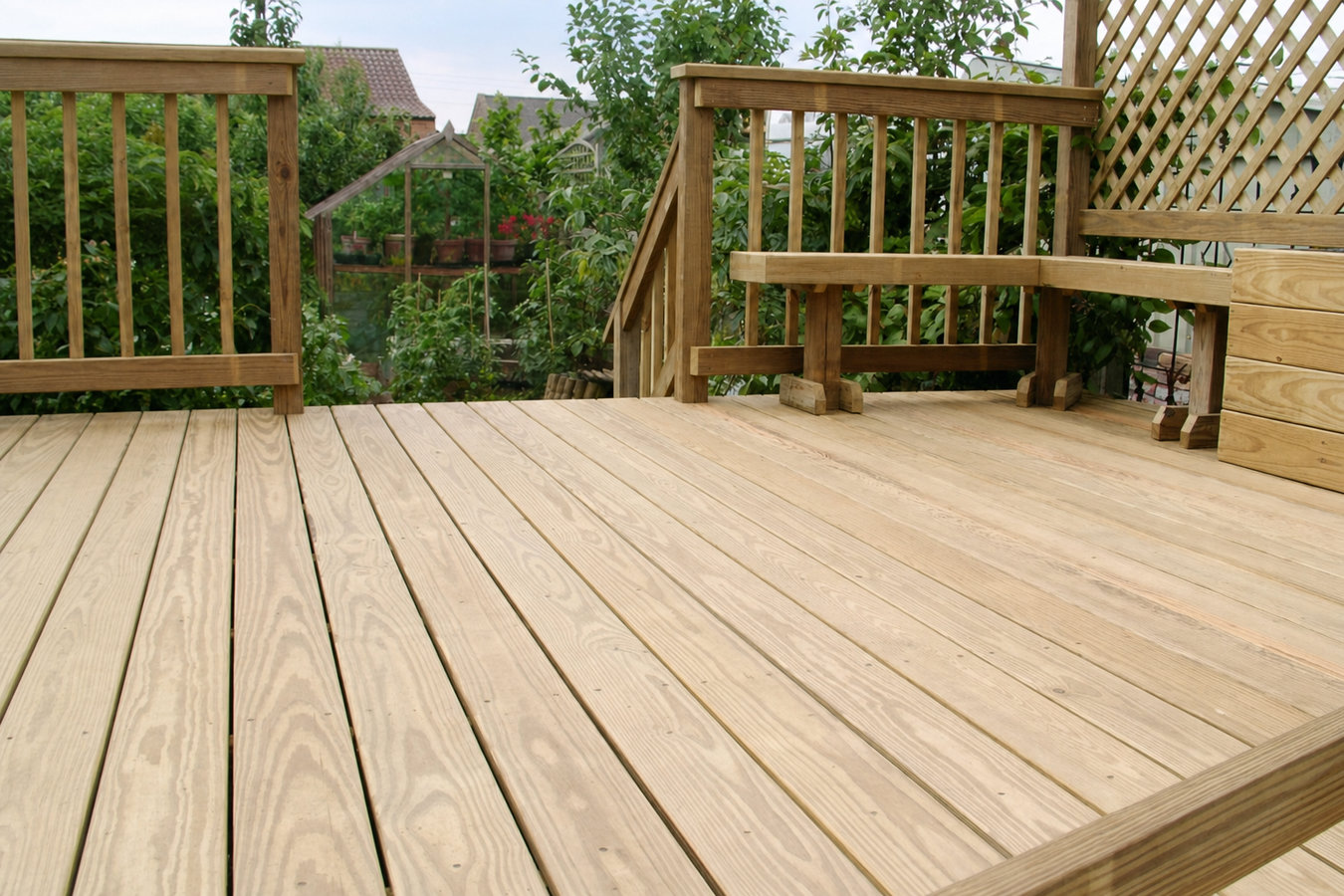
Want a solid, affordable deck that works with Altoona's hillside lots and tough winters? We build pressure-treated wood decks with proper frost-depth footings, full permits, and a written estimate before any work starts.
Pressure-treated wood deck construction in Altoona, PA means setting concrete footings below the frost line, framing with posts and joists sized for Pennsylvania snow loads, and fastening treated boards across the frame - most standard decks are complete in two to five days once the permit is approved and materials are on site.
Pressure-treated lumber is the most common deck material in this area because it is durable, readily available, and costs less upfront than composite options. If you are not sure whether wood or composite is the right call for your situation, our cedar wood deck construction page covers another natural wood option worth comparing.
If your backyard is sloped or uneven with nowhere comfortable to sit, you are missing out on a significant portion of your home's livable space. In Altoona, where many lots follow the natural hillside contour, a deck is often the most practical way to create a flat, functional outdoor area without major grading work.
If you walk across your current deck and feel boards that give under your weight, hear unexpected creaking, or see posts that rock when pushed, the structure has likely been compromised. Altoona's freeze-thaw cycles and wet springs accelerate decay in older wood, especially decks that were never properly sealed.
Soft, dark, or crumbling wood means rot has set in, and rot spreads. Once the structural posts or beams are affected, patching individual boards will not solve the problem. Wet Altoona springs and moisture that collects under decks on sloped lots make rot a common issue in homes more than 15 to 20 years old.
If your deck is more than a couple of feet off the ground and the railings wobble or have gaps, it does not meet current safety standards. In Altoona, raised decks on sloped lots are common, and a full rebuild is sometimes the most cost-effective solution when railing problems signal broader structural deterioration.
We build new ground-level decks, raised decks on sloped Altoona lots, and full deck replacements where we tear out an aging structure and rebuild from the footings up. Every build starts with concrete footings dug to the required frost depth - at least 36 to 42 inches in this part of Pennsylvania - and a frame sized for local snow loads. We also handle the full permit process through the City of Altoona's Bureau of Codes and Inspections, so you don't have to track down forms or schedule inspections yourself.
If you are weighing materials, our deck staining and sealing service can extend the life of a new wood deck significantly - we can schedule that work after the first season once the lumber has dried. We also work with homeowners comparing natural wood to composite; the cedar wood deck construction page is a good starting point if you want a wood deck with a more refined appearance.
Best for homeowners who want a straightforward platform close to grade - simpler footings and framing keep costs lower.
Best for the many Altoona homeowners with hillside yards who need a flat usable surface elevated above uneven terrain.
Best for homeowners with a structurally compromised existing deck - we demo the old structure and build a new frame from the footings up.
Best for homeowners who need safe access from an elevated deck to the yard, with code-compliant railings included.
Altoona is built across a series of ridges and valleys in the Allegheny Mountains, and many residential lots have significant slope. A sloped yard means your deck may need to be raised higher on one side, which requires taller posts and more structural support - and drainage planning matters, because water pooling under a raised deck accelerates rot and creates a muddy mess. We have built raised decks on sloped lots throughout this area, including in Tyrone and Hollidaysburg, where the same terrain challenges come up regularly.
Much of Altoona's residential housing was built in the early-to-mid 20th century. Many of these homes have exterior walls made of older masonry, brick, or deteriorated wood framing that requires careful assessment before attaching a deck ledger. A contractor who doesn't check your home's wall construction before quoting can run into surprises mid-project. We inspect the ledger attachment point on every job before finalizing the plan - because that connection is the most common reason decks fail.
Reach out by phone or the contact form and we respond within one business day. We schedule a free on-site visit - 30 to 60 minutes - to measure the space, assess the lot, and answer your questions. A written quote follows within a few days.
Once you agree on a design and price, we apply for the required building permit. Permit approval typically takes one to two weeks. We handle all follow-up with the City of Altoona - you don't need to visit any office or track the application yourself.
Before digging begins, we call Pennsylvania 811 to have underground utility lines marked - protecting your gas, water, and electric. We also ask you to point out any irrigation lines or invisible pet fencing so nothing gets cut during footing installation.
We dig footings to frost depth, pour concrete, frame the deck, and install the decking boards, stairs, and railings. The city inspector checks the structure before we close in - then we walk the finished deck with you and answer any maintenance questions before we leave.
Spring build slots fill up fast in Altoona - reach out now and we will get you a written estimate with no obligation.
(814) 552-1158Altoona's winters regularly drop below freezing for months, and footings that aren't deep enough get heaved out of the ground. We dig every footing to at least 36 to 42 inches - the frost depth for Blair County - so your deck stays level through freeze-thaw cycles year after year.
A lot of Altoona homeowners assume their hillside yard makes a deck complicated or expensive. We have built raised decks on sloped lots across this area and know how to design a structure that works with your yard's grade, drains properly, and doesn't leave a muddy mess underneath after every rain.
We submit the permit application, coordinate the required inspection with the local building department, and deliver a fully permitted, documented deck. An unpermitted deck can delay or derail a home sale - we make sure that problem never comes up for you.
You get a detailed written estimate covering materials, labor, and permit fees before we start. We don't add charges without talking to you first. The American Wood Council's Deck Construction Guide (DCA6) sets the structural standards behind our quotes, so you can trust the numbers reflect real engineering - not guesswork.
Solid footings, proper permits, and honest pricing - those three things are what separate a deck that lasts from one that becomes a problem. For the structural standards behind how we build, the American Wood Council publishes the deck construction guide we reference on every project. For permit verification, the Pennsylvania 811 utility marking program is the required first step before any footing is dug.
A natural wood option with a more refined appearance and natural resistance to insects and rot.
Learn MoreProtect your new pressure-treated deck after the first season with professional cleaning, staining, and sealing.
Learn MoreSpring build slots fill up fast - contact us now to lock in your start date and get a written estimate before spots close.