Loading...
Serving Altoona, PA and surrounding areas. (814) 552-1158
A railing that wobbles is a safety problem, not just an eyesore. We install deck railings in Altoona that pass city inspection, hold up through Blair County winters, and give you and your family a deck you can use with confidence.
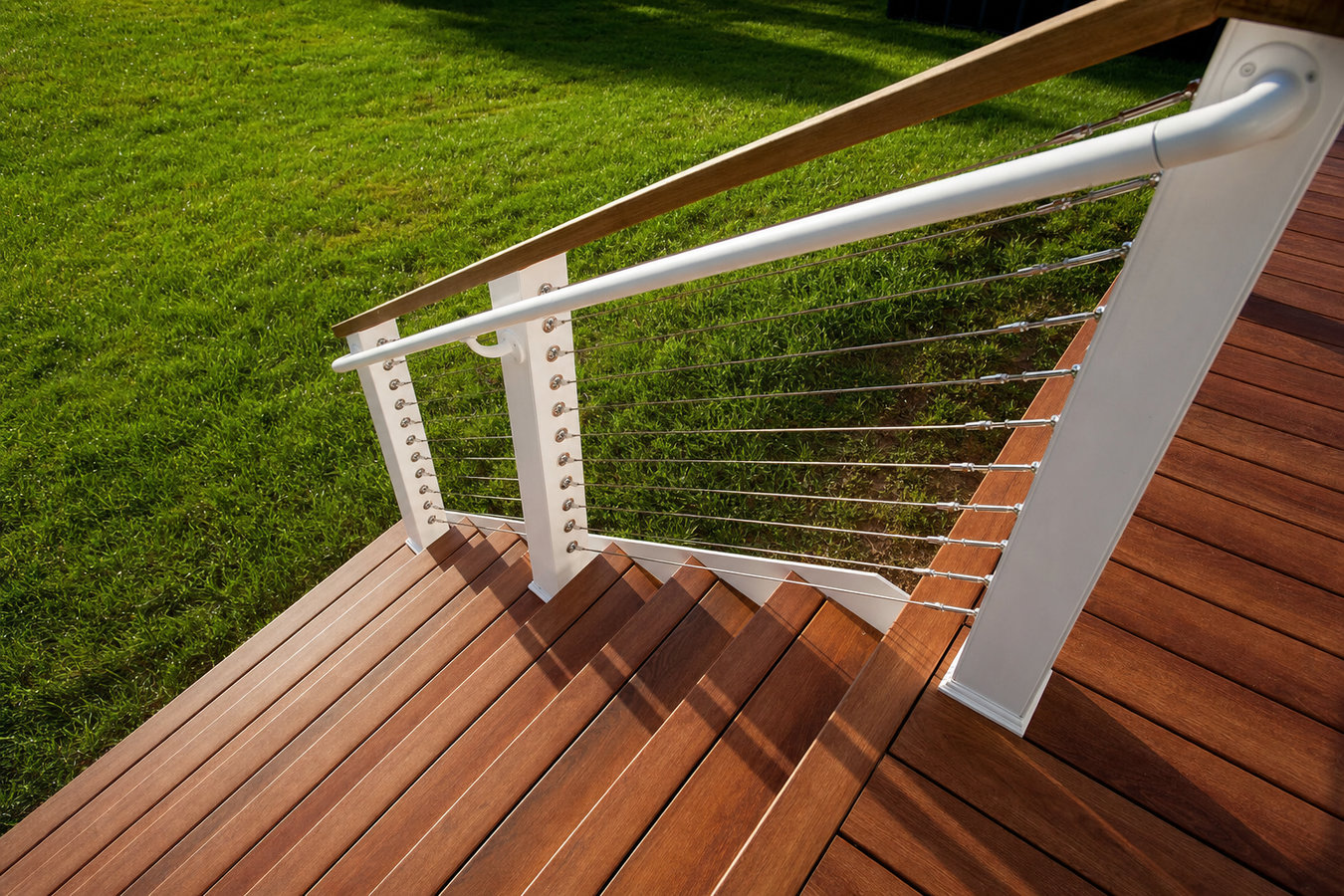
Deck railing installation in Altoona covers the full system - posts anchored to the deck frame, top and bottom rails, and the balusters in between - sized and spaced to meet Pennsylvania's current safety requirements, with most single-deck jobs completed in one to two days once the permit clears.
If your current railing wobbles when you push it, has wood that feels soft at the post bases, or sits lower than your hip, those are not cosmetic problems - they are safety failures. Altoona's freeze-thaw winters accelerate exactly this kind of damage, especially on decks built before 2004, when Pennsylvania's current statewide building code came into effect. Many homes in older neighborhoods like Juniata and Fairview have railings that no longer meet today's height and baluster-spacing standards, even if nothing looks obviously wrong. A new railing installation solves all of this in one visit. Many homeowners pair the work with a broader multi-level deck project when they are already rebuilding the structure underneath.
Because most railing replacements in Altoona require a city permit, your contractor needs to handle the application before work begins - and the job is not finished until it passes inspection.
Stand at each post and push it firmly from side to side. If it moves at all, the anchoring has failed. A railing that wobbles is no longer doing its job - and that is a fall risk, not just a maintenance item. This is the single most important check you can do yourself in five minutes.
In Altoona's climate, the base of wood posts - where they meet the deck surface - is the first place rot sets in. Press your thumbnail into the wood near the bottom of each post. If it sinks in easily or feels spongy, the post has begun to rot from the inside and needs to be replaced before it fails entirely.
If your railing hits you at mid-thigh or lower, it is likely below the height required by today's safety standards. This is common on older Altoona homes where decks were added in the 1970s or 1980s under different rules. A railing that is too short will not stop an adult from going over the edge if they stumble.
If you can slide your fist sideways through the space between the vertical pieces, the gaps are too wide by current standards. This is a child safety issue - a small child can slip through or get stuck. Older decks in Altoona's established neighborhoods frequently have this problem because the rules were less strict when they were built.
Every railing installation starts with post anchoring - securing the posts to the deck frame so they cannot shift under load. From there we attach the top and bottom rails, then install the balusters spaced tightly enough to pass inspection. Stair railings are a separate section with slightly different angle and graspability requirements; make sure to ask specifically whether stair sections are included in any quote you receive. If your railing work is part of a new deck build - or if you are adding a multi-level deck and need railing on elevated platforms - we coordinate both scopes together so permits and inspections run in sequence rather than causing delays.
Material options include pressure-treated wood (lower upfront cost, requires periodic sealing), composite (mid-range cost, very low maintenance, handles Altoona's freeze-thaw cycle well), and aluminum (similar maintenance profile to composite, clean modern look). All three meet Pennsylvania's current safety requirements when installed correctly. If you are planning a custom deck design at the same time, choosing the railing material early lets us match it to the decking surface and any built-in features from the start.
The most affordable option - suits homeowners who are comfortable with periodic sealing and want a traditional wood look.
Low maintenance and holds up through Blair County winters without absorbing moisture - ideal for homeowners who want the work done once and forgotten.
Nearly maintenance-free with a clean, modern profile - a good fit for contemporary deck designs or homeowners who want zero upkeep.
Separate from perimeter railing - covers the handrail, angle, and post anchoring specific to deck stairs, with its own code requirements.
Altoona sits in the Allegheny Mountains, and the region experiences hard freezes followed by thaws repeatedly throughout winter and early spring. This freeze-thaw cycle is one of the most damaging forces on outdoor wood - water works into small cracks, freezes and expands, and slowly breaks down the wood from the inside. If your current railing is wood and it is more than eight to ten years old, the posts may be weakening even if they look fine on the surface. A large share of Altoona's homes were also built before 1970, and decks added to those homes in the 1970s and 1980s often predate the safety standards that took effect in Pennsylvania in 2004. Homeowners in Hollidaysburg and Ebensburg face the same combination of older housing stock and harsh winters, and we see the same pattern of aging railings across the region.
Hillside lots add another factor. Many Altoona neighborhoods are built on the slopes of the Allegheny ridges, and a deck elevated higher on one side puts more stress on the corner posts and the anchoring system. A contractor who does not ask about your deck's elevation and slope during the estimate has not thought through the full scope of the job. We check these details before quoting so there are no surprises on installation day. The U.S. Consumer Product Safety Commission publishes deck safety guidance that covers exactly the kind of railing failures most common on older homes in regions with significant freeze-thaw exposure.
We ask a few basic questions: the size of your deck, whether you have stairs, and whether you are replacing existing railing or starting from scratch. Most contractors will want to see the deck in person before giving a firm price, because the condition of the existing frame affects what the job involves.
We measure the perimeter of your deck, check the frame condition, and look at how the deck connects to your house. You will talk through material options - wood, composite, aluminum - and get a sense of what each looks like and costs. Do not be shy about asking questions at this stage.
For most railing replacements in Altoona, a permit is required. We handle the application with the City of Altoona Bureau of Codes. This typically adds a week or two before work can begin. We confirm the permit is included in the project and that we will schedule the inspection.
The crew arrives with materials ready, removes old railing if applicable, anchors the new posts, attaches rails, and installs balusters. Most single-deck jobs are done in one day. The city inspector visits, checks post height, baluster spacing, and anchoring. Once it passes, the job is officially closed.
Free written estimate, no obligation. We reply within one business day and handle the permit from start to finish.
(814) 552-1158We handle the permit application with the City of Altoona Bureau of Codes and schedule the inspection when installation is complete. You receive documentation that the railing was installed to current safety standards - which matters when your home goes on the market and a buyer's inspector checks the deck.
A large share of Altoona's homes were built before 1970, and we regularly work on decks added to older brick exteriors, stone foundations, and frames that require extra care. We assess the condition of the existing deck frame before quoting, so we are not discovering problems on installation day.
Many Altoona lots sit on the Allegheny ridge slopes, and elevated decks put more stress on corner posts and anchoring. We account for slope and elevation during every estimate - not as an afterthought, but as a standard part of how we price and plan railing jobs in this area.
Pennsylvania law requires contractors doing residential work to register with the state attorney general's office. Our registration is verifiable online. We also carry liability insurance and workers' compensation - documents you should ask any contractor to show before signing anything.
These are the things worth asking any railing contractor before the work starts - permits, insurance, experience with older homes, and hillside work. We are glad to answer all of them directly. The North American Deck and Railing Association is a good resource for understanding what quality railing installation looks like and what questions are worth asking before you commit.
If your deck structure itself needs replacing, start here - a full design consultation ensures the framing, materials, and railing all work together from day one.
Learn MoreEvery elevated platform on a multi-level deck needs compliant railing - we design and install both the structure and the railing as a single coordinated project.
Learn MoreSpring slots fill fast - reach out now before the busy season hits and lock in your installation date.